About the Labyrinth
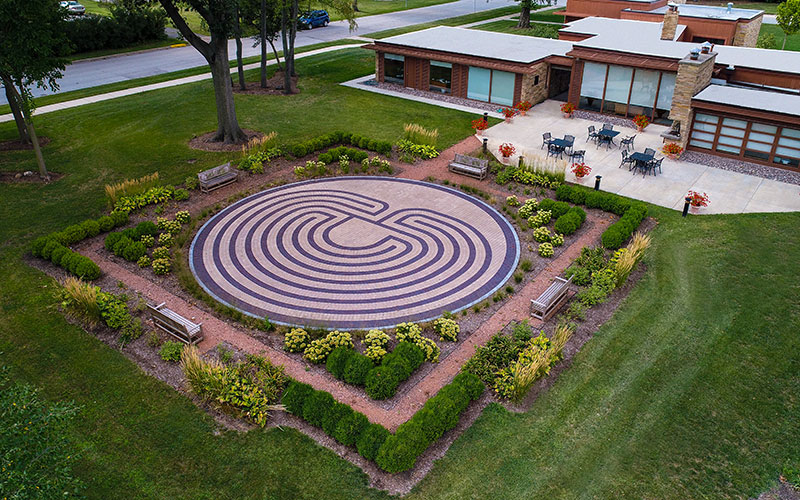
A labyrinth is more than a stone path. It is a quiet invitation to slow down, reflect, and reconnect with what matters most.
For centuries, labyrinths have served as tools for contemplation, prayer, healing, and personal discovery. Unlike a maze, there are no dead ends or wrong turns. Instead, a single winding path leads inward and outward again, creating space for intentional movement, reflection, and renewed perspective.
The Aurora University Labyrinth continues this tradition. Made possible through a generous gift from the Class of 1967 and dedicated in 2017 at the Wackerlin Center for Faith and Action, the feature offers students, faculty, staff, alumni, and community members a welcoming place for meditation, contemplation, and vocational exploration.
Like many historic examples, Aurora University's labyrinth is based on a classical seven-circuit design. Found in cultures and traditions around the world, this pattern has guided journeys of reflection for centuries and serves as the foundation for the labyrinth experience at Aurora University.
Why Seven Circuits?
The design of the Aurora University Labyrinth follows one of the oldest and most recognizable labyrinth patterns. Built around seven circuits, the design reflects a tradition found throughout history and across cultures.
For many people, the number seven carries symbolic meaning, often representing completeness, wisdom, transformation, and spiritual growth. As walkers follow the winding path toward the center and back again, the seven circuits create a journey that invites patience, mindfulness, and reflection.
While each person's experience is unique, many visitors find that the journey offers an opportunity to step away from daily distractions and focus more clearly on the questions, hopes, and experiences they carry with them.
Construction of the Labyrinth
A labyrinth is made special not only by those who walk it, but also by the people who bring it to life.
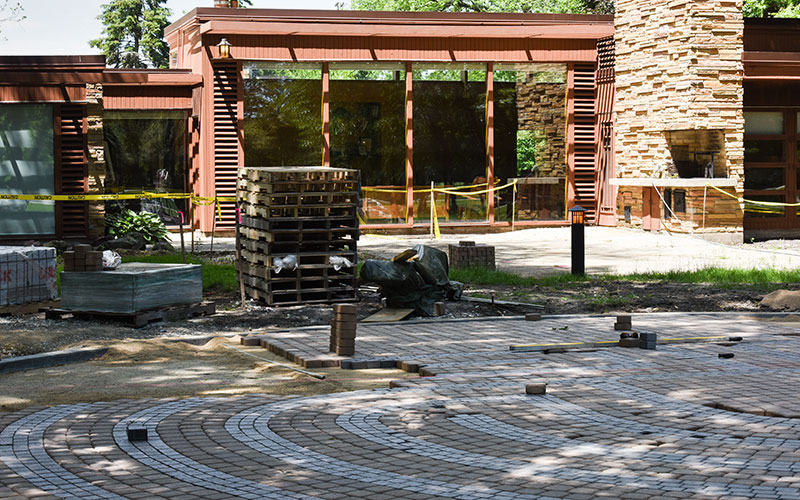
Each stone of the Aurora University Labyrinth was carefully cut, carved, and laid by hand by the builders and artisans of Labyrinths in Stone, transforming a vision into a lasting space full of promise and community.
The photographs below capture the construction process and illustrate how the labyrinth took shape before being dedicated to the university community.


Labyrinths Around the World
While the Aurora University Labyrinth has its own unique story, it is part of a much larger tradition.
Labyrinths have appeared in cultures around the world for thousands of years and continue to serve as places of reflection, healing, contemplation, and coonnection. Today, labyrinths can be found in churches, hospitals, universities, parks, retreat centers, and public spaces across the globe.
Interested in exploring more? Use the Labyrinth Locator to discover labyrinths near you and learn how numerous communities continue to engage with this ancient practice.