Giselle Martinez ’28 shares her journey in education and advocacy
February 16, 2026
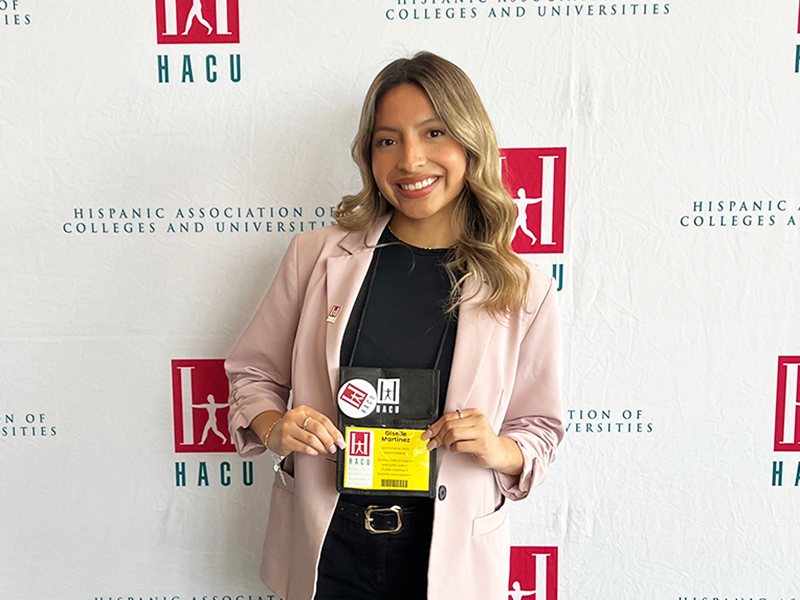
Giselle Martinez ’28 envisions a more accessible and inclusive future for underrepresented populations — and is already building her life around doing something about it. A Political Science and Public Policy and Business Administration double major, Martinez is involved in multiple civic leadership and engagement programs, and even secured an internship with Illinois State Senator Karina Villa ’03.
In a recent interview, Martinez shared how she is applying skills learned in the classroom and in professional settings to advance her mission of advocacy.
What inspired you to choose Aurora University, and how has your experience here shaped your academic and personal growth?
My older brother is an alumnus, and watching him thrive here as a first-generation college student strongly influenced my decision. Seeing someone I admire succeed at AU gave me confidence that this was a place where I could grow and challenge myself as well. I’ve taken initiative in seeking out competitive leadership programs and internships, and representing AU in national spaces. These experiences have helped me become more independent, confident, and intentional about my goals.
What led you to pursue a double major, and how do your fields of study connect to your long-term goals?
My biggest inspiration for pursuing a double major is my mother, a local business owner in downtown Aurora. Watching her build and manage multiple income streams, often doing it alone, taught me the importance of versatility, resilience, strategy, and long-term planning.
Political Science and Public Policy helps me understand systems of power, governance, and community impact, while Business Administration prepares me to think strategically, sustainably, and entrepreneurially. Together, these programs equip me with the tools to tackle my goal of creating meaningful impact through public service.
What leadership roles or programs are you currently participating in?
I am currently involved in the Hispanic Association of Colleges and Universities (HACU) Voces Nuevas program, the HOPE College Leadership Program, and the Up to Us Leadership Network Civic Leaders Cohort. I also recently attended the Harvard LEAD Conference. In my internship for Sen. Villa, I support legislative and community-focused work.
Why did you get involved in these opportunities?
My family, especially my mother and grandparents, have been a major source of motivation for me. They did not always have the opportunity to fully pursue their education, and that drives everything I do. Getting involved in these programs is a way to honor their sacrifices and push myself into spaces where I can grow as a leader, advocate, and representative for my community.
What key takeaways have you gained from these experiences so far?
I’ve gained critical skills in public speaking, policy analysis, advocacy, networking, and coalition-building. I’ve learned how to engage with elected officials, navigate professional spaces with confidence, and articulate community needs in meaningful and effective ways. Most importantly, I’ve learned the value of using my voice, not only for myself but for others who may not have access to these spaces.
As you look ahead to graduation, what are your goals, and how do you hope to use your education and experiences to make an impact?
I plan to pursue opportunities in politics and government, and attend law school. I hope to use my education and experiences to influence policy, expand access, and open doors for Latino and other underrepresented communities.
What is one piece of advice you would share with other students, especially those interested in leadership, public service, or advocacy?
Seek out opportunities even when you don’t feel “ready.” Growth happens when you step into rooms that challenge you. Don’t wait for permission or perfection — apply, advocate for yourself, and trust that you belong. As Latino students, pursuing higher education is not only a personal achievement but a responsibility to our families and heritage, especially when those before us didn’t always have the chance to make it this far.