AU students learn wildlife rehabilitation at Oaken Acres
February 11, 2026
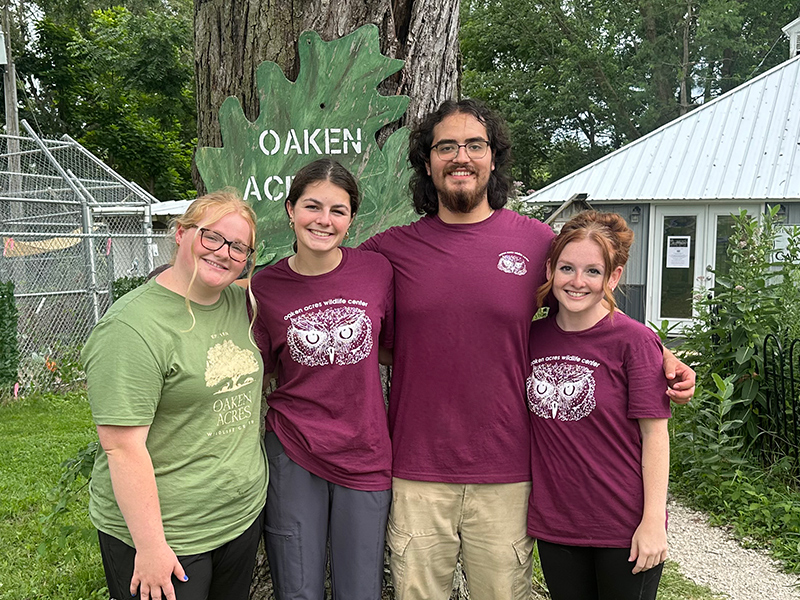
Every summer, Oaken Acres Wildlife Rehabilitation Center in Sycamore, Illinois, welcomes student interns for a behind-the-scenes look at the demanding and rewarding work of wildlife rehabilitation. Through this immersive internship, Aurora University students step into the high-volume care environment — one that challenges, inspires, and prepares them for real-world animal care while advancing Oaken Acres’ mission.
Founded in 1984, Oaken Acres grew from a one-person operation into a regional hub for wildlife care. As Executive Director Kathy Stelford explained, its mission “boils down to four words: we save wild lives,” primarily through hands-on rehabilitation and day-to-day education on public education. Each year, the center receives nearly 2,000 injured, orphaned, or diseased wild animals and accepts all species and ages, with the exception of bats and skunks, per legal regulations.
A hands-on wildlife internship unlike any other
Oaken Acres interns typically work 12-15 weeks from May through September, spending 32-40 hours per week gaining intensive experience with northern Illinois wildlife. Species include raccoons, foxes, coyotes, fawns, songbirds, squirrels, opossums, raptors, waterfowl, and turtles.
Unlike facilities that silo trainees by species, Oaken Acres cross-trains interns so they’re prepared for whatever arrives at the door. Interns rotate through admissions, feeding and handling, enclosure care, medical support, observation and record-keeping, and assisting with releases back into the wild.
For Human-Animal Studies graduate Kylie Denton ’25, the experience offered a way to align lifelong passion with purpose.
“I have loved animals my whole life, and I’ve always wanted to partake in something greater for them,” said Denton. “I knew wildlife rehabilitation was something I wanted to explore because I wanted to be someone who could help save animals and nurse them back to health so that they can live the life they deserve back in the wild.”
A typical day begins with switching into on-site shoes, clocking in, and checking the assignment board — and no two days look the same, according to Human-Animal Studies, Environmental Studies and Sustainability, and Biology triple major Faith Wilson ’27. The work is physically demanding but deeply rewarding, with interns moving between feeding raccoons, cleaning enclosures, and assisting with owls, squirrels, and coyotes as needs shift throughout the day.
Structured mentorship with real responsibility
At Oaken Acres, training begins one-on-one and scales quickly. Interns typically first learn cleaning and diet prep, followed by hand-feeding. Early rounds include belly checks after every meal to confirm proper feeding, with supervisors double-checking work until interns gain confidence.
“In the Bird Room, we learned how to feed baby birds directly into their crop — going really, really slow,” said Human-Animal Studies and Biology double major Emiliano Mendoza ’26. “Staff showed us exactly what to watch for, how to clean properly, and how to do it safely. You weren’t rushed, but you were expected to do it right. Being trusted with that level of work really reaffirmed what I want to do.”
The culture at Oaken Acres also rewards curiosity. When an AU intern hypothesized a disease transfer between raccoon and bird enclosures, the team investigated and found that the student’s idea helped prevent further illness — a tangible win for animal welfare and a lesson in scientific observation.
Inside the pace of wildlife rehabilitation
At the height of the season, the team cared for more than a hundred raccoons and just as many birds, representing nearly every species native to northern Illinois. Each year in June, the onsite population on any given day can be as high as 700 patients. The sheer volume — combined with long hours, heavy lifting, and a steady flow of new intakes — makes the experience both physically and mentally demanding.
That pace requires constant teamwork, communication, and time management. Interns learn to coordinate feedings, share observations, and adjust to shifting priorities throughout the day.
“If you have 40 raccoons to feed, you delegate and keep notes — this one didn’t eat at Noon; on the next shift, try to get more formula in,” Wilson explained.
During the busiest weeks, students rely on one another to stay organized, adapt when extra help is needed, and keep the operation running smoothly.
Supporting paid internships and meaningful partnerships
Unlike many wildlife centers that rely solely on volunteers, Oaken Acres has long offered paid internships, recognizing the essential role students play in its operations. The program began about 10 years ago with unpaid positions and transitioned to paid roles roughly five years later.
This past summer, AU reimbursed Oaken Acres for a portion of intern wages through an Illinois Board of Higher Education grant, which supports meaningful student learning experiences in partnership with community organizations. The grant funding helped sustain the program while donations were directed toward the construction of a new raccoon building designed to consolidate care in a more efficient, healthier, and safer environment for both staff and animals.
Remaining funds allowed Oaken Acres to support returning interns’ attendance at the National Wildlife Rehabilitators Association annual conference, expanding professional exposure and learning opportunities.
To learn more about internship experiences for AU students, visit aurora.edu/internships.