Get interview ready: answering questions and asking the right ones
September 02, 2026
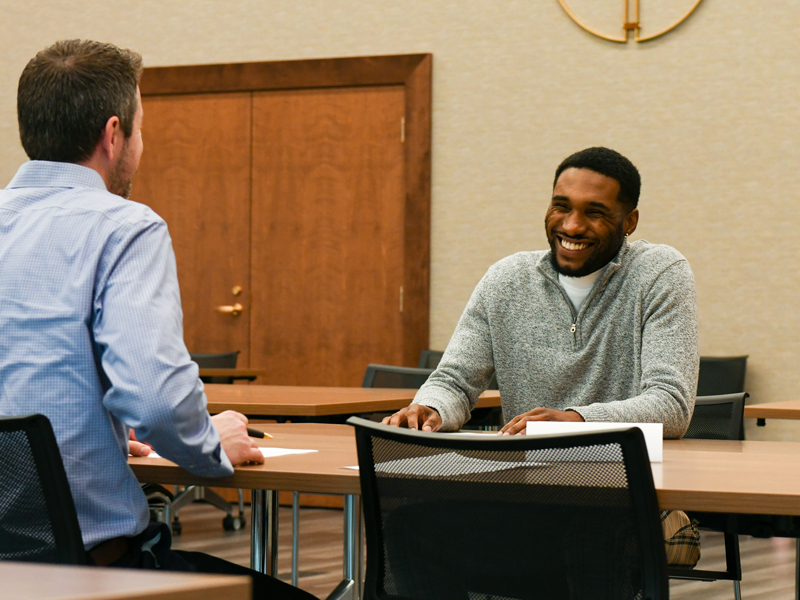
You’ve researched the organization, reviewed the job description, and prepared for interview day. Now comes the part that makes many candidates nervous: What are they going to ask you, and how should you answer?
While you can’t predict every question, you can prepare for many of the topics that are likely to come up. The goal isn’t to memorize the perfect response. It’s being ready to talk confidently about your experiences, skills, and what you could bring to the position.
Be ready for the questions you know are coming.
Most interviewers will start the conversation by saying, “Tell me about yourself.” But this isn’t an invitation to tell your entire life story. Think of your response as a brief professional introduction.
Consider:
- Where are you now?
- What relevant experience, skills, or interests do you have?
- Where do you want to go next?
Most importantly, connect your background to the opportunity you’re interviewing for.
You’ll also almost certainly be asked, “Why are you interested in this position?” When answering, go beyond, “It sounds like a great opportunity.”
Think about what specifically appeals to you about the work, why you’re interested in the organization, and how the opportunity connects with your personal skills, experiences, interests, or career goals.
If asked about your strengths, choose ones that matter for the position and then back them up with evidence. Instead of simply saying, “I’m organized,” provide an example of how you’ve demonstrated organization and how this skill helped you accomplish something.
Comparatively, if asked about weaknesses or areas you are working to improve, you don’t need to disguise a strength as a weakness. Saying you work too hard probably isn’t fooling anyone; instead, choose something genuine that isn’t central to your ability to perform the job. More importantly, explain what you’ve done — or are currently doing — to improve.
Many other questions will begin with the phrase “Tell me about a time when…” These behavioral interview questions ask you to provide evidence from your past experiences. This is where the STAR method can help organize your answer:
- Situation:What was happening?
- Task:What needed to be accomplished?
- Action:What did you do?
- Result:What happened?
Before your interview, identify about five to seven professional or academic stories from your experiences that demonstrate skills such as teamwork, communication, leadership, problem-solving, adaptability, initiative, and handling challenges.
And remember, your examples don’t have to come exclusively from full-time employment. Internships, part-time jobs, volunteer work, class projects, student organizations, athletics, and other experiences can all provide great interview stories. One may even work for several different questions, depending on which part of the experience you emphasize.
You get to ask questions, too.
When an interviewer asks if you have any questions, you should rarely answer no. Asking good questions is another opportunity to demonstrate your interest and determine whether the position is actually a good fit for you.
Consider asking:
- What would success look like in this position during the first six months?
- What are the biggest priorities for the person stepping into this role?
- How would you describe the team I’ll be working with?
- What do you enjoy most about working here?
- What are some challenges someone in this position might encounter?
- How is performance evaluated?
- What opportunities are there for professional development or growth?
- What are the next steps in the hiring process?
Try to avoid asking questions that could easily be answered by looking at the organization’s website. Instead, use this time to learn something you couldn’t find through your research.
Practice beats perfection.
You don’t need to have the perfect answer to every interview question. Strong interviewing is about clearly communicating who you are, what you’ve done, what you’ve learned, and what you can contribute.
The more you practice telling your stories aloud, the easier it becomes to adapt them to different questions, and the more naturally you’ll be able to communicate your strengths.
Before your next interview, don’t just prepare answers. Prepare your stories, prepare your questions, and prepare to have a conversation.
Want to practice before your interview?
Career Success staff are available to help AU students and alumni throughout the interview process. Contact career@aurora.edu to schedule an in-person or virtual appointment with a career counselor.