Get interview ready: preparing, performing, and following up
August 27, 2026
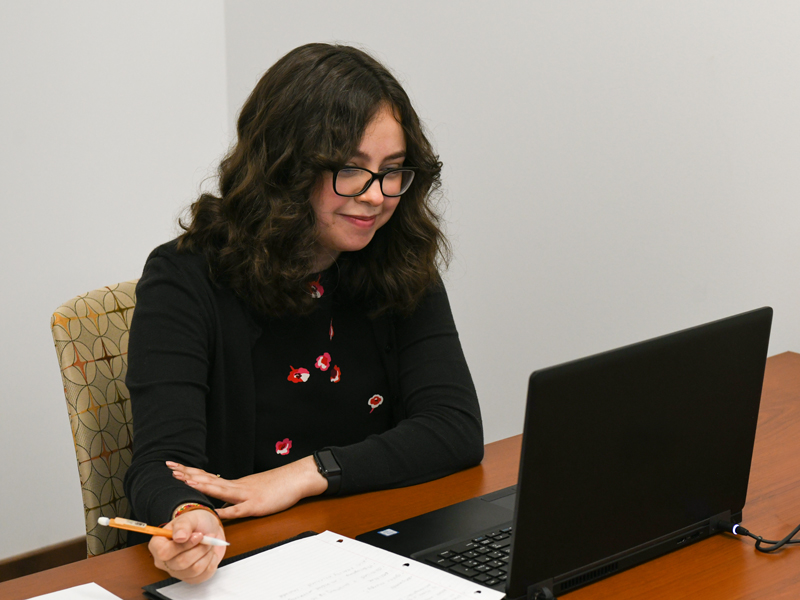
You submitted the application, your resume caught someone’s attention, and now you’ve been invited to an interview. Great! But what happens next?
Interviews can look very different depending on the employer and position. You might meet someone face-to-face, join a Zoom call, answer questions over the phone, or even record responses without another person watching in real time.
No matter the format, preparation can help you enter your interview feeling more confident and ready to make a strong impression.
Know what type of interview you’re walking into.
Phone interviews are often used as an initial screening before candidates advance to a longer interview. Because the recruiter can’t see you, your voice and enthusiasm are especially important. Consider standing or smiling while you speak — it can naturally add more energy to your voice.
One advantage? You can keep your resume, the job description, and a few notes in front of you for reference.
An in-person interview gives you the opportunity to experience the workplace and interact with prospective colleagues face-to-face.
Remember to plan your route ahead of time, know where you’ll park or enter the building, and aim to arrive about 10–15 minutes early. Bring a few copies of your resume, something to take notes with, and prepared questions to ask at the end of each conversation.
It’s important to know that your interview starts before the first question. Be courteous to everyone you meet and pay attention to the environment. You’re evaluating the organization, too!
Zoom or virtual interviews should be treated just as professionally as an in-person one.
Test your camera, microphone, internet connection, and meeting link ahead of time. Find a quiet space with good lighting and a distraction-free background. Keep your resume, the job description, and a few notes nearby, but avoid reading from a script. When speaking, look toward your camera to create the feeling of eye contact.
Recorded interviews can feel a little awkward because you may be providing responses without interacting with another person. Depending on the platform and employer, you may receive a question with limited preparation time and then have to record your response within a certain timeframe.
To prepare, practice answering potential questions on camera beforehand. Pay attention to your pace, energy, and the length of your answers. Most importantly, don’t let the lack of a live interviewer make your responses less conversational.
Prepare before the interview.
Good interviewing starts well before someone says, “Tell me about yourself.”
Before your interview:
- Re-read the job description and identify the skills and qualifications the employer emphasizes.
- Research the organization, including its mission, services or products, clients, and recent news.
- Know the content on your tailored resume and be prepared to discuss anything you’ve included on it.
- Think about experiences that demonstrate skills, such as teamwork, communication, leadership, problem-solving, adaptability, and initiative.
- Practice talking about your experiences aloud. Thinking through an answer and actually verbalizing it are two very different things!
You don’t need to memorize your answers. In fact, overly rehearsed responses can sound scripted. Instead, know the key points and examples you want to communicate.
Follow up after the interview.
Send a thank-you email within 24 hours of your interview. Your message doesn’t need to be long — thank the interviewer for their time, mention something specific you discussed, reiterate your interest in the position, and briefly reinforce why you believe you could contribute to the organization.
If you interviewed with multiple people, send individualized messages when possible.
If the employer gave you a timeline for next steps, make note of it. If that timeline passes without an update, it’s appropriate to send a polite follow-up asking about the status of their decision.
Career Success can help.
Interview preparation doesn’t have to be something you do on your own. Career Success staff are available to help AU students and alumni practice their responses, sharpen their interview skills, and build confidence before the real thing.
Contact career@aurora.edu to schedule an in-person or virtual appointment with a career counselor.